





 +82 51.977.8000





How Does Hyperbaric Oxygen Therapy Work?
Hyperbaric oxygen therapy uses a hyperbaric chamber at 2 atmospheres or more to raise the concentration of oxygen dissolved in the blood plasma by more than 10 times. In place of blocked microvessels, oxygen is delivered directly by diffusion into the perilymph of the cochlea, which works to prevent necrosis of auditory hair cells that have become hypoxic and to regenerate hearing.
Normally, most oxygen is carried bound to haemoglobin in red blood cells, and only a small amount travels dissolved in the plasma.
When you breathe oxygen inside a hyperbaric chamber at a pressure higher than atmospheric pressure, the amount of dissolved oxygen in the plasma increases considerably.
Oxygen dissolved in the plasma can spread even to tissue around fine blood vessels that red blood cells have difficulty passing through.
The cochlea is where the hair cells that convert sound into nerve signals are gathered, and it is a tissue with a high oxygen demand.
The blood vessels supplying the inner ear are narrow and have few alternative routes, so even a brief drop in blood flow can easily affect it.
Sudden sensorineural hearing loss often has no clear cause, but it is explained that reduced blood flow to the inner ear and hypoxia may be involved.
Hyperbaric oxygen therapy targets this and is used with the aim of supporting microcirculation and oxygen supply in the inner ear.
| Category | Normal breathing | Hyperbaric oxygen therapy environment |
|---|---|---|
| Surrounding pressure | Atmospheric pressure | About 2–3 times atmospheric pressure |
| Gas inhaled | Air containing some oxygen | Close to 100% oxygen |
| How oxygen is carried | Mostly bound to haemoglobin | Oxygen dissolved in the plasma increases considerably |
| Effect on the inner ear | When blood flow drops, oxygen supply drops with it | Aims to help oxygen diffuse even to areas with reduced blood flow |
Why Is Hyperbaric Oxygen Used in ENT Care?
In ENT care, hyperbaric oxygen therapy is recommended as a key adjunctive treatment, particularly for sudden sensorineural hearing loss and acute tinnitus, because of the unique anatomical structure of the inner ear (cochlea).
Unlike other parts of the body, the cochlea, which detects sound, and the auditory nerve have an end-artery structure with almost no collateral vessels, so even slight instability in blood supply exposes them to rapid oxygen deprivation and ischaemic damage.
When the oxygen supply is cut off, auditory hair cells are rapidly damaged, resulting in hearing loss and tinnitus.
Steroid Therapy Alone vs. Steroids Combined with Hyperbaric Oxygen Therapy
The standard first-line treatment for sudden sensorineural hearing loss is steroid therapy, but steroids, which reduce inflammation and swelling, are limited on their own in quickly restoring the metabolism of inner ear tissue that has already become hypoxic.
When hyperbaric oxygen therapy is combined at this stage, high-concentration oxygen is delivered by diffusion directly into the perilymph of the cochlea while the inflammation is being treated, preventing hair cell death, preventing further damage to the auditory nerve and promoting nerve cell recovery.
Clinical studies have also reported that combining early medication with hyperbaric oxygen therapy significantly improves hearing recovery rates compared with medication alone.
In particular, in patients with severe hearing loss of 70 dB or more or with accompanying dizziness, it has been shown to significantly improve hearing recovery rates by 20–30 percentage points or more.
| Comparison | Steroids alone | Steroids + hyperbaric oxygen combined |
|---|---|---|
| Treatment target | Immune suppression and relief of inflammation and swelling | Blocking inflammation and improving inner ear hypoxia |
| Oxygen supply to the cochlea | Depends on blood flow recovering after swelling subsides | Supplies hyperbaric oxygen to the perilymph |
| Hair cell ATP production | Depends on metabolic recovery after inflammation subsides | Supports ATP production through oxygen supply |
| Clinical hearing improvement rate | Mild 60–70% / Severe around 30–40% | Mild 70–80% / Severe 55–65% or more |
| Use as salvage therapy | Limited scope for additional dosing if first-line treatment fails | Second-line salvage therapy when steroids do not work |
| Convenience and accessibility | Oral medication or intratympanic injection | Visits to a hospital equipped with a chamber (2.0–2.5 ATA, 60–90 minutes daily) |
| National health insurance coverage | Covered | Covered for hearing loss of 80 dB or more, within 1 month of onset |
Which Patients with Sudden Sensorineural Hearing Loss Need Hyperbaric Oxygen Therapy?
In sudden sensorineural hearing loss, hyperbaric oxygen therapy is needed for patients with severe hearing loss of 70–80 dB or more on pure-tone audiometry, patients with accompanying dizziness, patients who do not respond to steroid treatment, and patients within the golden time of 2 weeks from onset.
- Patients with severe to profound hearing loss of 70–80 dB or more: a serious level at which almost nothing can be heard even when someone shouts into the ear, where blood flow through the labyrinthine artery is completely blocked and the hair cells are left starved of oxygen
- Patients with vestibular symptoms (dizziness, vertigo, vomiting): the type with the poorest clinical prognosis, in which ischaemic damage extends beyond the cochlea into the vestibular organ and can even cause difficulty walking
- Patients who do not respond to first-line oral steroid treatment: patients whose hearing improves by less than 10 dB or not at all after 1–2 weeks of high-dose steroids, making them candidates for second-line salvage therapy
- Patients with all-frequency (full-range) or descending-type hearing loss: unlike low-frequency hearing loss, descending and flat types carry a very high likelihood of ischaemic necrosis, so active use of hyperbaric oxygen is recommended
Sudden sensorineural hearing loss is a condition in which the timing of initial treatment can affect hearing recovery.
As time passes, there is less room for damaged hair cells to recover, so the effect of hyperbaric oxygen therapy also tends to be greater when it is started early.
Because the approach to sudden hearing loss can differ depending on when treatment starts, it is advisable to check your condition early with a hearing test.
If one ear suddenly feels blocked or you cannot hear well, it is a good idea to have your hearing checked first at an ENT clinic in Busan.
Starting It Together with Initial Treatment
It is often considered alongside other treatment in situations where recovery may be slow, such as when the initial hearing loss is large or dizziness is present.
Hyperbaric oxygen therapy is not completed in a single session but is repeated several times, so whether you can keep to the schedule consistently throughout the treatment period is also taken into account.
During treatment, hearing tests are repeated to check for changes and decide whether to continue.
When Recovery After Steroids Is Insufficient
If a hearing test after finishing steroid treatment shows that recovery is not sufficient, hyperbaric oxygen therapy may be considered as an additional option.
This is commonly called salvage treatment, and it is an option reviewed together with intratympanic steroid injection (an injection behind the eardrum).
In this case too, the general standard is to start within 1 month of onset.
When Steroid Treatment Is Difficult, How Effective Is Hyperbaric Oxygen Therapy?
When systemic steroid treatment is not possible, hyperbaric oxygen therapy is a key alternative treatment for preventing the death of auditory hair cells.
Systemic steroids can affect blood sugar, the stomach and blood pressure, so they are used with caution in some patients.
- Diabetes with poorly controlled blood sugar
- Digestive conditions such as stomach ulcers
- Uncontrolled high blood pressure or glaucoma
- An active infection or previous side effects from steroids
In these cases, an intratympanic steroid injection, which places less burden on the body in terms of systemic side effects, is often considered first.
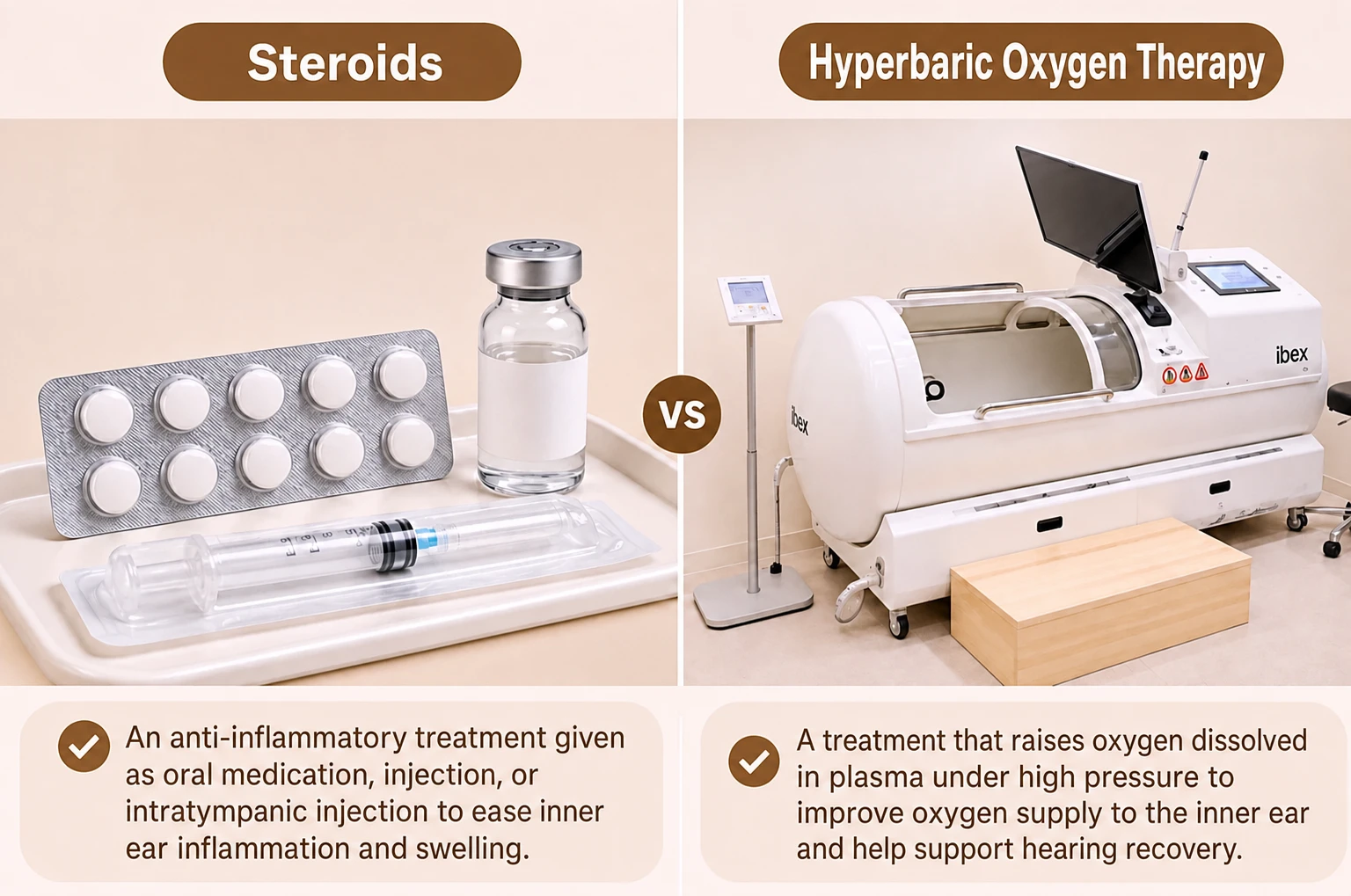
While steroids calm inflammation in the inner ear, hyperbaric oxygen increases the oxygen in the blood plasma, helping deliver oxygen to the inner ear.
An intratympanic steroid injection, given directly into the space behind the eardrum (the middle ear cavity), is sometimes combined with hyperbaric oxygen therapy.
Dr. Kim Bo-young, Representative Director of Masterpiece ENT Clinic, looks at the initial degree of hearing loss, the time elapsed since onset, and the condition of the ears and lungs together to decide whether hyperbaric oxygen therapy and an intratympanic steroid injection are appropriate.
Why Does Ear Pain Occur During Hyperbaric Oxygen Therapy?
The most common discomfort during hyperbaric chamber treatment is a blocked feeling in the ear and stabbing pain (middle ear barotrauma), which is caused by a pressure imbalance in the middle ear as the pressure in the chamber rises.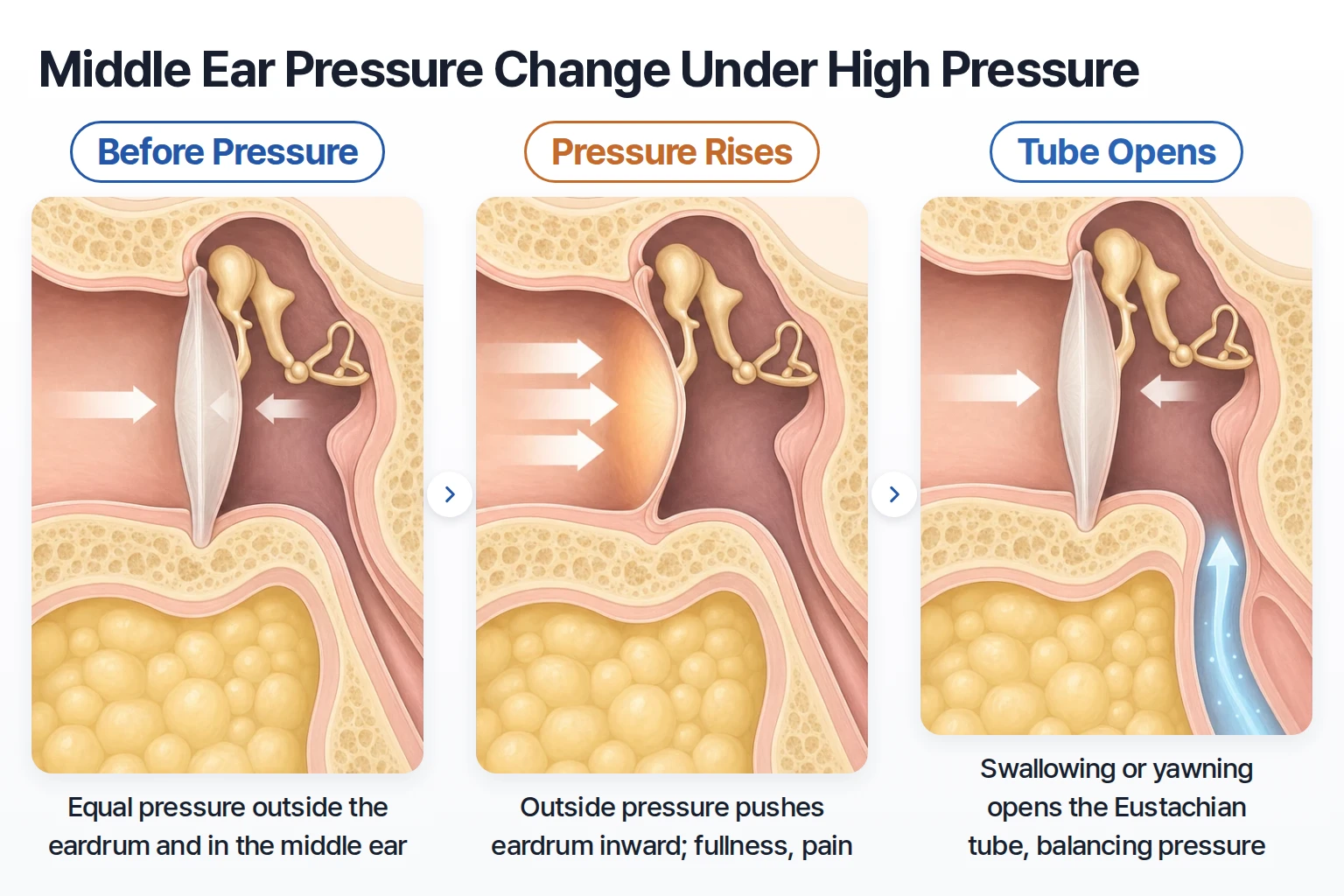
While the pressure is rising, if the pressure outside the eardrum becomes higher than in the middle ear, the eardrum is pushed inwards and you may feel blockage or pain.
Swallowing or yawning opens the Eustachian tube, which equalises the pressure in the middle ear and eases the symptoms.
If you develop ear pain during treatment, it is important not to put up with it but to tell our medical team straight away so the pressure can be adjusted.
| Reaction | What it looks like | How it is managed |
|---|---|---|
| Middle ear barotrauma | Blocked ears, pain, and rarely fluid collecting in the middle ear | Guidance on equalising pressure, adjusting the rate of pressurisation, ear examination if needed |
| Sinus pressure reaction | Aching around the forehead or cheekbones | Let us know in advance if you have nasal congestion; the schedule may be adjusted depending on your condition |
| Temporary change in vision | Distant objects becoming blurry during repeated treatment | Often returns to normal over time after treatment ends |
| Discomfort in an enclosed space | Feeling confined, anxiety | Explanation beforehand, communication with our medical team during treatment |
| Oxygen-related reaction | Rarely, facial twitching or nausea | Keep to the set pressure and time standards, and stop immediately if symptoms appear |
When Hyperbaric Oxygen Therapy Is Not Performed
Hyperbaric oxygen therapy is not performed if you have an untreated pneumothorax.
- Untreated pneumothorax: this is a contraindication because it can worsen in a high-pressure environment.
- Nasal congestion from a cold or rhinitis: the Eustachian tube may not open well, so ear pressure reactions can be stronger.
- Otitis media or a history of ear surgery: the condition of the eardrum and middle ear is checked first.
- Lung disease, anxiety in enclosed spaces, possible pregnancy, current medications: these affect whether treatment is possible and how the schedule is arranged.
Please tell our medical team about the condition of your ears, nose and lungs and any medications you are taking before hyperbaric oxygen therapy.
Hyperbaric oxygen therapy does not have the same effect for everyone, and depending on your condition, treatment may be postponed or a different approach may be recommended.
If the blocked feeling lasts more than a day after treatment or your hearing feels worse, it is a good idea to have your eardrum checked at an ENT clinic in Busan.
Masterpiece ENT Clinic's Examination Standards Before Hyperbaric Oxygen Therapy for Sudden Sensorineural Hearing Loss
For hyperbaric oxygen therapy to be effective, it needs to be supported by a care system that closely tracks changes in hearing and the condition of the eardrum and coordinates closely with medication.
- Detailed hearing assessment first: before treatment begins, pure-tone audiometry and speech audiometry should be used to accurately assess the affected frequency ranges and the degree of nerve damage.
- Monitoring treatment progress: even while treatment sessions are under way, hearing improvement should be reassessed regularly to adjust the number of chamber sessions (usually around 10–20) and the pressure.
- Checking eardrum safety: checking the eardrum before and after treatment and continuously monitoring for signs of barotrauma is essential.
If you are looking into hyperbaric oxygen therapy for sudden sensorineural hearing loss or acute tinnitus, it is important to check whether the clinic can manage early medication and hyperbaric oxygen therapy in one place, linked with ENT diagnostic equipment.
Kim Bo-young, Representative Director of Masterpiece ENT Clinic and an otology specialist, carries out detailed hearing tests and an eardrum examination first so that the golden time in the early stage of sudden sensorineural hearing loss is not missed.
We provide systematic guidance on combining a medical hyperbaric oxygen chamber of 2 atmospheres or more with steroid medication, tailored to each patient's condition.
If you notice sudden warning signs in your ear, we recommend setting up an integrated treatment plan suited to your condition within the early golden time.